
2027 is coming.
Are your people ready for what’s next?
Three questions to ask before 2027
At this time of year, calendars fill up, budgets are debated and “let’s pick this up in January” starts doing some rather heavy lifting.
But as organisations finalise their ambitions for 2027, one question deserves attention before the year ends:
Are we preparing our people to deliver what we are planning?
New technology and business strategies create possibilities. People turn those possibilities into better decisions, stronger teams and results.
For learning and development professionals, this is an opportunity to shape the conversation not simply around what training to offer, but around what people will need to do differently. Here are three questions to bring to your planning table.

Are we preparing leaders for the expectations of tomorrow?
What will your managers need to handle in 2027 that they were not expected to handle before? Perhaps it is leading teams through continuous change, making decisions with incomplete information or maintaining trust as AI changes how work gets done.
Development should give leaders opportunities to practise these responsibilities: having difficult conversations, exercising judgement and helping people move forward with confidence.
After all, “lead through uncertainty” is much easier to put in a job description than to do on a Tuesday afternoon.

Are we developing people’s capabilities alongside the technology they use?
Introducing a new tool is a starting point. Helping people use it thoughtfully is where its value begins.
As roles evolve, employees need more than technical familiarity. They need to question outputs, apply context, solve problems and recognise when human judgement matters most.
An AI assistant can produce an answer in seconds. Deciding whether it is the right answer still deserves a moment.

Are our development investments connected across the organisation?
In a multinational organisation, local relevance matters. So does a shared foundation.
Individual programmes can be valuable, but their impact grows when they reinforce one another across teams, functions, regions and leadership levels. Shared expectations, consistent leadership practices and opportunities to apply learning help turn separate activities into organisational capability.
The opportunity:
Build the human capability behind the strategy
These questions reflect the three priorities explored in Simitri’s Learning Trends Report 2027: LEAD, THINK and BUILD.
Together, they point to something more substantial than AI literacy or a longer list of skills.
Technological progress does not automatically develop the people who work alongside it. That takes intentional investment.
The starting point is the work itself. What decisions will people need to make? What conversations will managers need to lead? Where will teams need to collaborate differently?
From there, development can connect business priorities with practical learning, opportunities to apply it and support from managers. Success becomes visible in how people lead, think and work together.
A strategy defines what an organisation wants to achieve.
Its people determine what it can deliver.
That makes people development a central part of preparing for 2027, and a conversation worth starting now.
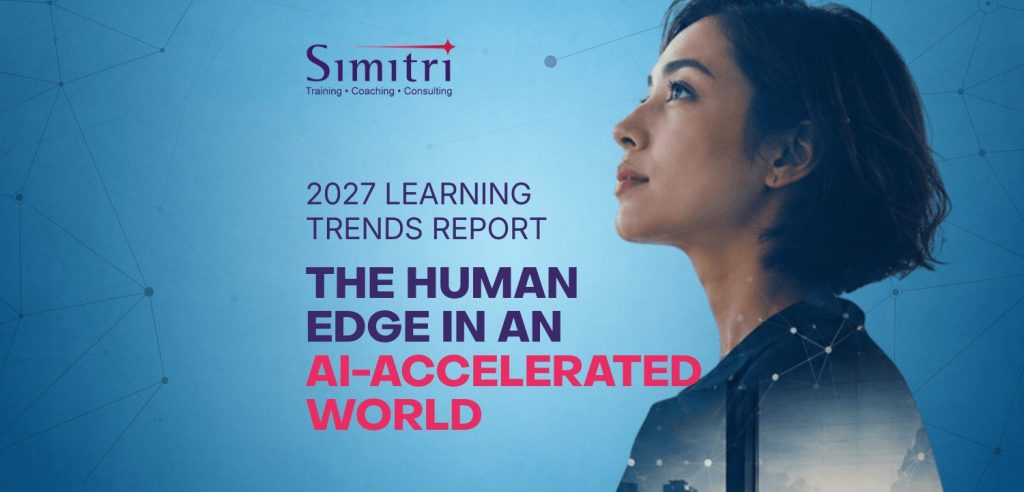
For more insight, explore Learning Trends Report 2027: The Human Edge in an AI-Accelerated World.
Let’s turn your 2027 priorities into a practical development plan.
Whether you are strengthening leadership, building critical thinking or connecting learning across regions, Simitri can help you design and deliver development around your business, your people and the responsibilities ahead.
Contact your Simitri account manager to start the conversation